
$700 Million, 184 Kilometres, One BIM First: What's Verified on the Kasomeno-Mwenda Toll Road
GED Africa says its Kasomeno-Mwenda toll road, a $700m-plus, 184-kilometre crossing linking Zambia and the Democratic Republic of Congo, is the first road construction project in the region to run on Building Information Modelling. I went to the company's own records to see what that claim actually rests on, and what it doesn't.

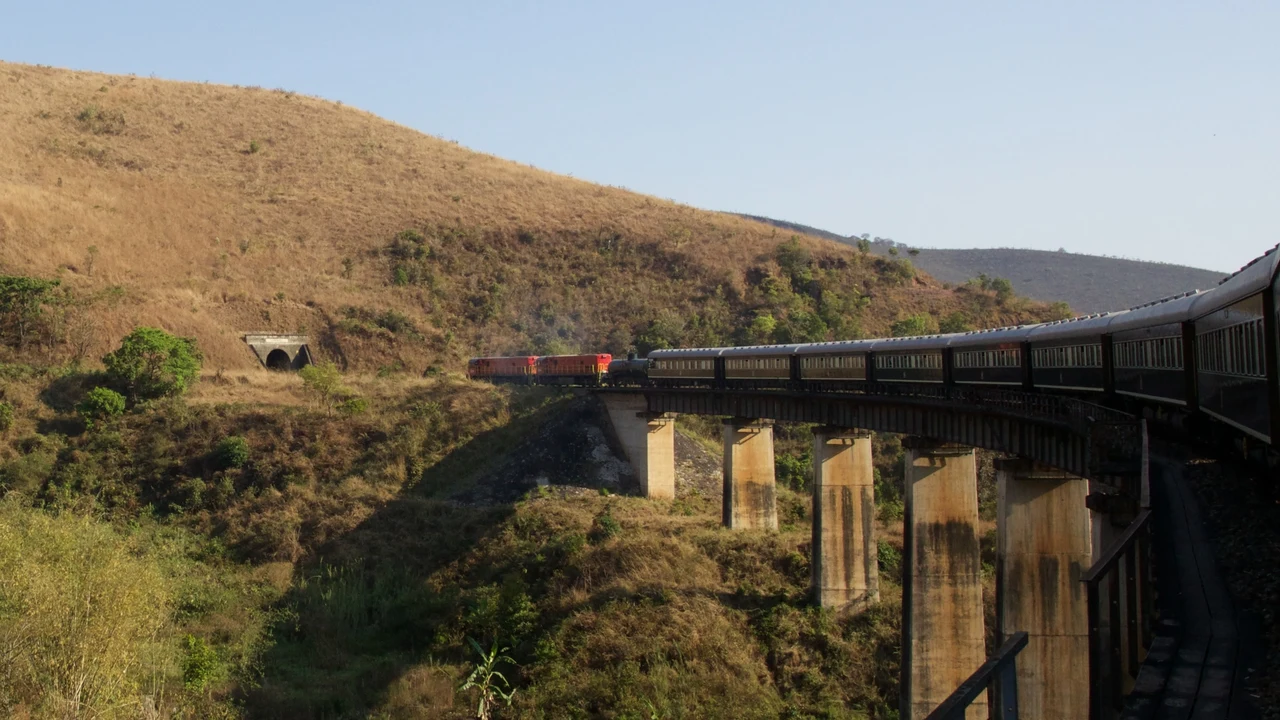
This is TAZARA, the 1,860km Tanzania-Zambia Railway, crossing the Mpanga River gorge in southern Tanzania - not the Kasomeno-Mwenda toll road, which has no public photograph of its own yet. TAZARA is the existing corridor that already carries Zambian Copperbelt freight to the port of Dar es Salaam; Kasomeno-Mwenda is a separate, newer road crossing built to relieve pressure on the congested Kasumbalesa border post further west, on the DRC side of the same trade basin. Photo: David Brossard via Wikimedia Commons, CC BY-SA 2.0.
I spent more than a decade inside Uganda's roads sector, long enough to have seen "a first for the region" printed on a press release more than once, and to have learned to go and check it before I repeat it. So when I read that GED Africa, the concessionaire building the Kasomeno-Mwenda toll road between Zambia and the Democratic Republic of Congo, had described the project as running on a digital delivery system its own FAQ calls "the first road construction project in the region to use BIM," I did what this series exists to do: I went to the primary record, not the search snippet, before I printed a word of it.
What the project actually is
Kasomeno-Mwenda - also written Kasomeno-Kasenga-Chalwe-Mwenda - is a 184-kilometre toll road linking Zambia's Copperbelt to the DRC, conceived as an unsolicited proposal by GED Africa Zambia Limited back in 2012. Zambia signed a public-private-partnership concession with GED Africa in 2016, covering financing, design, construction, operation and tolling; the DRC followed in late 2022, when GED Africa's Congolese subsidiary, GED Congo, signed its own 25-year concession with the DRC government. Presidents Hakainde Hichilema of Zambia and Félix Tshisekedi of the DRC co-presided over groundbreaking on 2 October 2023, and road construction itself began in June 2024. The scope includes upgrading existing sections to a dual-lane carriageway, a new cable-stayed bridge across the Luapula River at the Zambia-DRC border, two one-stop border posts with warehousing and parking, and a tolling system built around twelve high-speed weigh-in-motion stations. Agreements on both sides require at least 30% of construction work to go to domestic contractors. None of that is in dispute; Engineering News Record and Construction Review, two independent outlets I read directly rather than via search summary, both confirm it, and both put the project's value above $700 million.
Where the BIM claim comes from - and what it says
The BIM framing is not independent reporting. It comes from GED Africa itself. The company's own account of a design-committee meeting in Lubumbashi on 27-28 February 2024 says the project sponsor, Duna Aszfalt Zrt of Hungary, presented Building Information Modelling to the assembled design team, and that "the project will be the first road construction project in the region to use BIM." GED Africa's Zambian subsidiary describes the system in more detail on its own FAQ page: BIM, it says, is "a digital project delivery system developed by Duna Aszfalt which is deployed on the Kasomeno-Mwenda Project," built to let the road, bridge, border posts and tolling infrastructure be designed and coordinated virtually before construction, and used for coordination, scheduling, cost control, quality assurance, maintenance planning and long-term asset management. That is a real, named, functioning project-delivery practice, described by the people running it, not a marketing phrase with nothing behind it. It is also, worth saying plainly, a claim about itself made by the company building the road - not a figure audited by a standards body or confirmed by an independent reviewer.
What I could not verify, and left out
This is the part of the job that matters more than the part that is easy to write. Later trade coverage of this project, published at the end of October 2026, appears to push the framing further - from "first in the region" to a stronger continental claim, and to add specific drone-survey precision figures. I tried, more than once, to open that coverage directly rather than lean on a search engine's summary of it, and could not get past the publisher's access wall from this session. Per this series' own rule, a figure I have not read with my own eyes in a primary source does not get printed under my name, however plausible it sounds. So you will not find a completion date, a precision-in-millimetres claim, or an "Africa-wide first" claim anywhere in this piece. What you will find is only what GED Africa's own site states, which is itself the stronger evidence anyway: a company on record, in its own words, naming the practice and the vendor behind it.
Why a contractor's own claim is still worth a story
I could have waited for an independent audit of "first in the region" before writing a word. I didn't, for one reason: on a continent where BIM adoption on public infrastructure is still argued over in op-eds rather than written into contracts - South Africa's own CIDB has been publicly pushed toward a national mandate for over a year without one landing - a $700 million, two-government toll road naming its information-modelling vendor, its design-committee date and its intended uses in public is a higher bar than most African megaprojects clear. The Africa Coffee Park airstrip I wrote about last week has no named BIM standard at all, by design, because none has been commissioned yet. Kasomeno-Mwenda has gone further: it has named Duna Aszfalt's system, dated its first design-committee presentation, and tied it to coordination, scheduling, cost control and long-term asset management, on a project that already has two heads of state and a signed bridge contract with CCECC behind it. A claim is not proof, but a company willing to put its delivery method on the record, with a vendor's name attached, is not nothing either - and the DRC-Zambia corridor economy, built on copper and cobalt moving out through a notoriously congested Kasumbalesa border crossing, is exactly the kind of traffic that a model-coordinated border post and toll system is meant to serve.
What I would ask GED Africa next
If this claim is going to hold up, three things would settle it for me. First: has an independent party - a lender, an insurer, a standards body - reviewed the information model, or is "first in the region" resting on GED Africa's word alone? Second: is the model built to an open standard like IFC, or is it a closed Duna Aszfalt proprietary system that locks the DRC and Zambian road authorities out of their own asset data once the 25-year concessions end? Third: will the completed toll road's asset information - the bridge, the border posts, the tolling infrastructure - hand over to the two governments in a usable digital-twin format, or does "long-term asset management" mean GED Africa's internal use only? Those are the same three questions I would ask of any African infrastructure concession claiming a digital-delivery first, and they are the difference between a press-release claim and a practice other African megaprojects can actually copy.
For decision-makers: treat a concessionaire's "first in the region" claim as a starting point for due diligence, not the end of it. If you are a government or lender on a BIM-claiming African PPP, ask for the three things above in writing - independent review, open-standard handover, and who owns the asset data at concession end - before you repeat the claim in your own documents.
For engineers: if you work the DRC-Zambia Copperbelt corridor, or any cross-border concession like it, push for IFC-based deliverables now, while the design committee is still meeting, not at handover. A proprietary system that works well for the contractor during construction can become a locked box for the asset owner the day the concession ends.
- Venture Kubariho, unveiling the future with AfroBIM
Sources & further reading
- Engineering News-Record, 25 October 2023 - "Long-Awaited Central Africa Toll Road Linking Multiple Nations Is Under Way": the 184km length, >$700m value, 2 October 2023 groundbreaking with Presidents Hichilema and Tshisekedi, concession history and the Luapula River bridge scope
- Construction Review Online - "Kasomeno-Kasenga-Chalwe-Mwenda Toll Road Linking Multiple Nations Gets Under Way": corroborating project scope, figures and timeline
- GED Africa, 27 February 2024 - "Bilateral Discussions Advance Kasomeno-Mwenda Toll Road Project": Duna Aszfalt's BIM presentation at the Lubumbashi design-committee meeting, and the company's own "first road construction project in the region to use BIM" framing
- GED Zambia - FAQ: BIM described as a digital project delivery system developed by Duna Aszfalt, and its stated uses (coordination, scheduling, cost control, quality assurance, maintenance planning, asset management)
- GED Africa, 19 March 2025 - "Kasomeno-Mwenda Advances With Bridge Construction Contract": the 362m cable-stayed Luapula River bridge contract with CCECC, signed 15 March 2025, and the named executives on both sides
- Wikimedia Commons - "Rovos Rail on TAZARA track across Mpanga River" by David Brossard, CC BY-SA 2.0: source of this story's hero photograph
Note: GED Africa's "first road construction project in the region to use BIM" is the company's own characterisation of its project, not an independently audited claim, and this piece treats it as such throughout. A later trade-press article (Engineering News / Mining Weekly, 30 October 2026) appears to extend this framing and add drone-survey precision figures; this piece does not repeat any of that article's specific claims because the publisher's site could not be opened directly in this session to verify them against the original text, and a claim read only as a search-engine summary is not treated as verified here. The bridge length is given as 362 metres, per GED Africa's March 2025 announcement, which supersedes an earlier 345-metre design figure reported at the 2023 groundbreaking. The hero photograph shows Tanzania's TAZARA railway, not the Kasomeno-Mwenda toll road itself, which has no freely-licensed photograph of its own yet; the caption states this plainly.