
92% Accuracy, 3 Countries, Zero African Cities at COP31: Africa's Daily Bulletin for 16 November 2026
CG Waste Data's AI platform is now live in Kenya, Nigeria and Uganda at 92% model accuracy. Nairobi's ConstructAfrica Summit returns 26-28 November with a construction-technology award. COP31's Antalya resilience session named zero African cities. Four sourced stories.

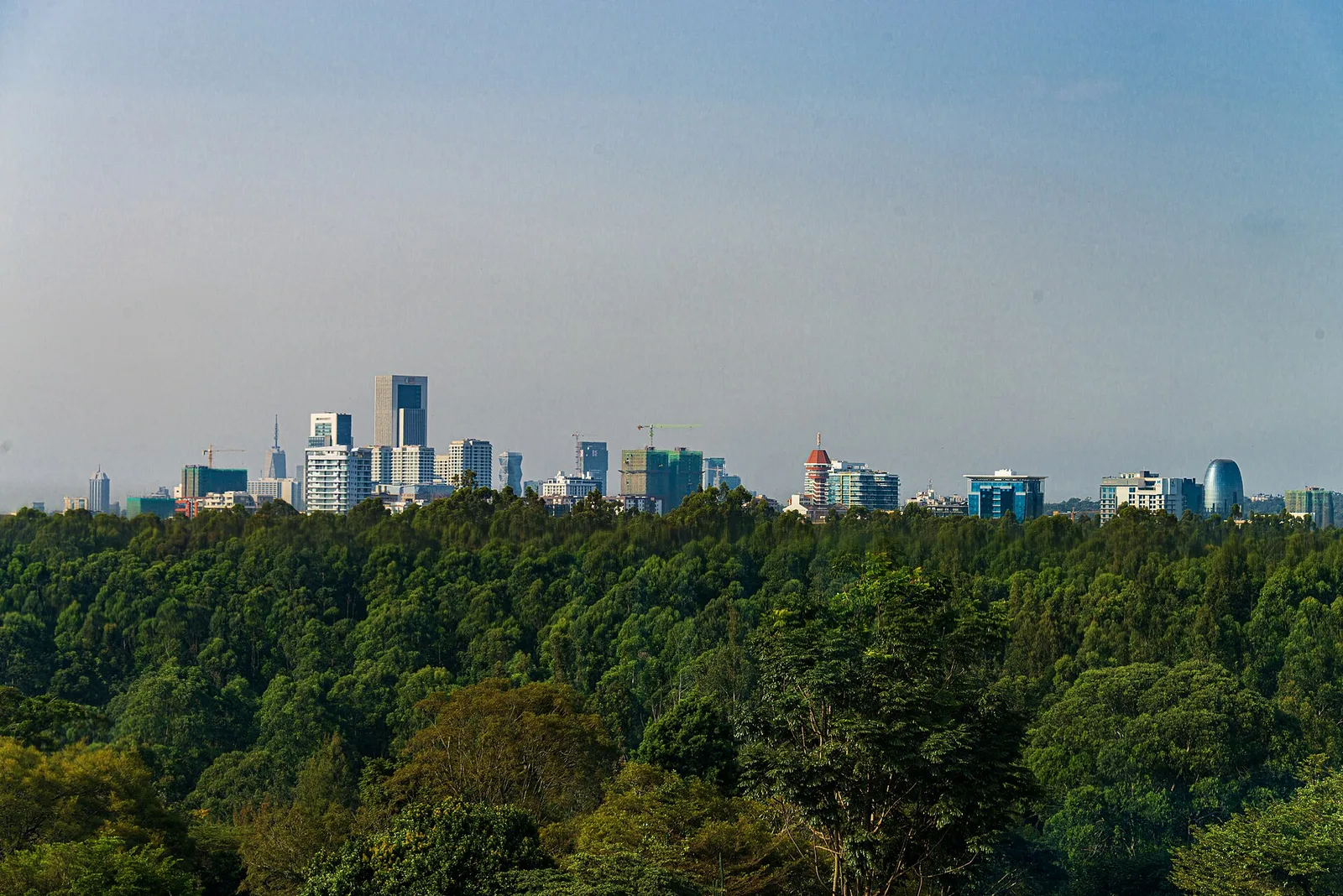
Nairobi, Kenya - host city for the ConstructAfrica Summit & Awards running 26-28 November, not a photograph of the summit or its award ceremony. Photo: Daniel Case via Wikimedia Commons, CC BY-SA 4.0.
Four stories reached me this week, and three of them are about Africa doing the work quietly while the fourth is about a global climate summit that forgot we exist. Nairobi is about to host the continent's construction industry for its own awards night, with a technology-innovation category on the card. A South African-born waste-data platform says its AI model is now accurate enough to trust, and it is already live in three countries. A Northern Cape mine has a drone-LiDAR case study worth reading if you still think reality capture is a nice-to-have. And at COP31 in Antalya, a session built specifically around resilient cities and infrastructure named not one African city. Read that last one twice.
Nairobi hosts ConstructAfrica's Summit & Awards on 26-28 November, with a construction-technology prize on the table
The ConstructAfrica Summit & Awards 2026 runs 26-28 November at the JW Marriott Hotel Nairobi, under the theme "Constructing Africa's Future Through Collaboration, Innovation & Excellence." The Excellence Awards Gala falls on 27 November, with categories including Africa Infrastructure Project of the Year, Innovation in Construction Technology, Excellence in Green & Sustainable Design, Innovation in Infrastructure Funding & Finance, and Contractor, Consultant and Client of the Year - entries had to be for projects completed in Africa within the last three years, with nominations closed on 12 October and finalists due on 13 November. Confirmed speakers include Hon. Ndiritu Muriithi, Chairman of the Kenya Revenue Authority; Engr. Noimot Salako-Oyedele, Deputy Governor of Nigeria's Ogun State; Dhruv Jog, Managing Director of Tanzania's Advent Construction; and Dr. Nelson Ogunshakin OBE, who chairs ConstructAfrica's own Industry Advisory Board. A technology-innovation award category, by itself, proves nothing. But a continental summit that puts digital delivery on equal footing with contractor-of-the-year is still worth watching for who shows up to collect it.
CG Waste Data's AI waste-forecasting platform is live in three countries, and the company says its model hits 92% accuracy
CG Waste Data's unified smart-waste platform launched on 10 September and is already active in Kenya, Nigeria and Uganda, with the company seeking further expansion across Sub-Saharan Africa. The system forecasts construction-waste volumes before demolition even starts, tracks recovered materials - bricks, steel reinforcement, timber, recycled aggregates - between sites and a digital marketplace, and automates ESG dashboards aligned to GRI and EU Taxonomy reporting frameworks. The company says its forecasting model reaches 92% accuracy; that figure, and early-adopter claims of a 52% cut in carbon emissions and material recovery rates up to 78%, are the company's own and have not been independently verified. The context is real regardless: Africa generates an estimated 500 million tonnes of construction and demolition waste a year, and its urban population is projected to approach 1.34 billion by 2050. A platform that can forecast that waste before a single wall comes down is doing exactly what AI in AEC is supposed to do.
A Northern Cape manganese mine shows, in practice, what a drone LiDAR survey buys a rail upgrade
Earlier this year, a manganese mine in South Africa's Northern Cape turned to rail to escape the cost and inefficiency of moving ore by road - and before touching the existing track, it commissioned a drone LiDAR survey from 3DroneMapping to capture the corridor in detail. The deliverables: a dense 3D pointcloud running into millions of points, covering the rail alignment and the power transmission lines running alongside it, plus a high-density LiDAR dataset and a detailed orthomosaic. 3DroneMapping's Luke Wijnberg, who has around 15 years of aerial and land surveying experience across the continent, says the precise data on current track position, embankment levels and surrounding features became essential before engineers could plan the upgrade - faster than a ground survey, and without putting surveyors on live or hazardous track. No dollar figure or accuracy percentage was published alongside the case study, so I won't invent one. What the case study does show, cleanly, is reality capture doing its actual job: giving engineers a trustworthy baseline before steel meets ground.
COP31's "Resilient Cities" session, built to close the implementation gap, closed it without a single African city on the agenda
On 12 November, the Asian Development Bank co-hosted a COP31 session in Antalya titled "Resilient Cities: Bridging the Implementation Gap" - built around rapid urbanisation, disaster risk, infrastructure stress and rising waste generation, with a stated focus on sustainable city finance, resilient infrastructure and standards, efficient buildings, and circular-economy and wastewater-reuse solutions. The named speakers were ADB's Luca Di Mario and Norio Saito, İLBANK's Şevket Altuğ Taşdemir, the mayors of Turkish cities Muğla and Bursa, EBRD's Lin O'Grady and the World Bank's Ming Zhang. Every one of them represents a city, bank or ministry outside Africa. I am not going to manufacture an African angle a resilient-cities session simply does not have. I am going to say plainly that a session built specifically to turn global urban-resilience commitments into delivery, at a UN climate conference, found not one African mayor, city or project worth naming - and that absence is exactly the gap Afro-BIM exists to close.
For decision-makers: if your city, utility or ministry has a resilience or waste story worth telling, get it in front of a stage like ConstructAfrica's before the next global resilience session defaults to cities that already show up. Award categories and conference agendas are built from who submits, not who deserves it.
For engineers: CG Waste Data's forecasting model and 3DroneMapping's Northern Cape survey are the same lesson in two forms - a trustworthy baseline, captured before you commit steel or concrete, is worth more than the model you build on top of it. Earn the baseline first.
- Venture Kubariho, unveiling the future with AfroBIM
Sources & further reading
- ConstructAfrica Summit & Awards - official awards page: dates, venue, award categories, eligibility, deadlines
- Zawya / APO Group - ConstructAfrica Summit 2026 press release: venue, theme, confirmed speakers
- Africa Sustainability Matters - "AI and data push Africa's construction sector towards a circular waste economy": CG Waste Data launch, countries, accuracy claim, AfDB waste statistics
- sUAS News - Northern Cape manganese mine drone LiDAR rail survey case study
- Asian Development Bank - "Resilient Cities: Bridging the Implementation Gap," COP31 session page: date, speakers, session content
- Wikimedia Commons - "Nairobi skyline from Gem Hotel" by Daniel Case, CC BY-SA 4.0: source of this bulletin's hero photograph
Note: this bulletin's hero photograph shows Nairobi's skyline, the host city for the ConstructAfrica Summit & Awards - it is not a photograph of the summit or its awards ceremony, which have not yet taken place at the time of writing. CG Waste Data's forecasting-accuracy and early-adopter figures are company-reported and not independently verified. World news, curated and rewritten in the founder's voice for Africa's builders.