$2.5 Billion Groundbreaking, One Pipeline Still on Paper: Africa's Daily Bulletin for 24 November 2026
Dangote breaks ground on a $2.5 billion Namibian fuel terminal and a 1,700km pipeline still mostly on paper. Ghana cuts the sod on a $235 million Takoradi Port push. Lagos quietly takes delivery of three Red Line trainsets. Ethiopian engineers tell their own convention: BIM, not financing talk, is the bottleneck.

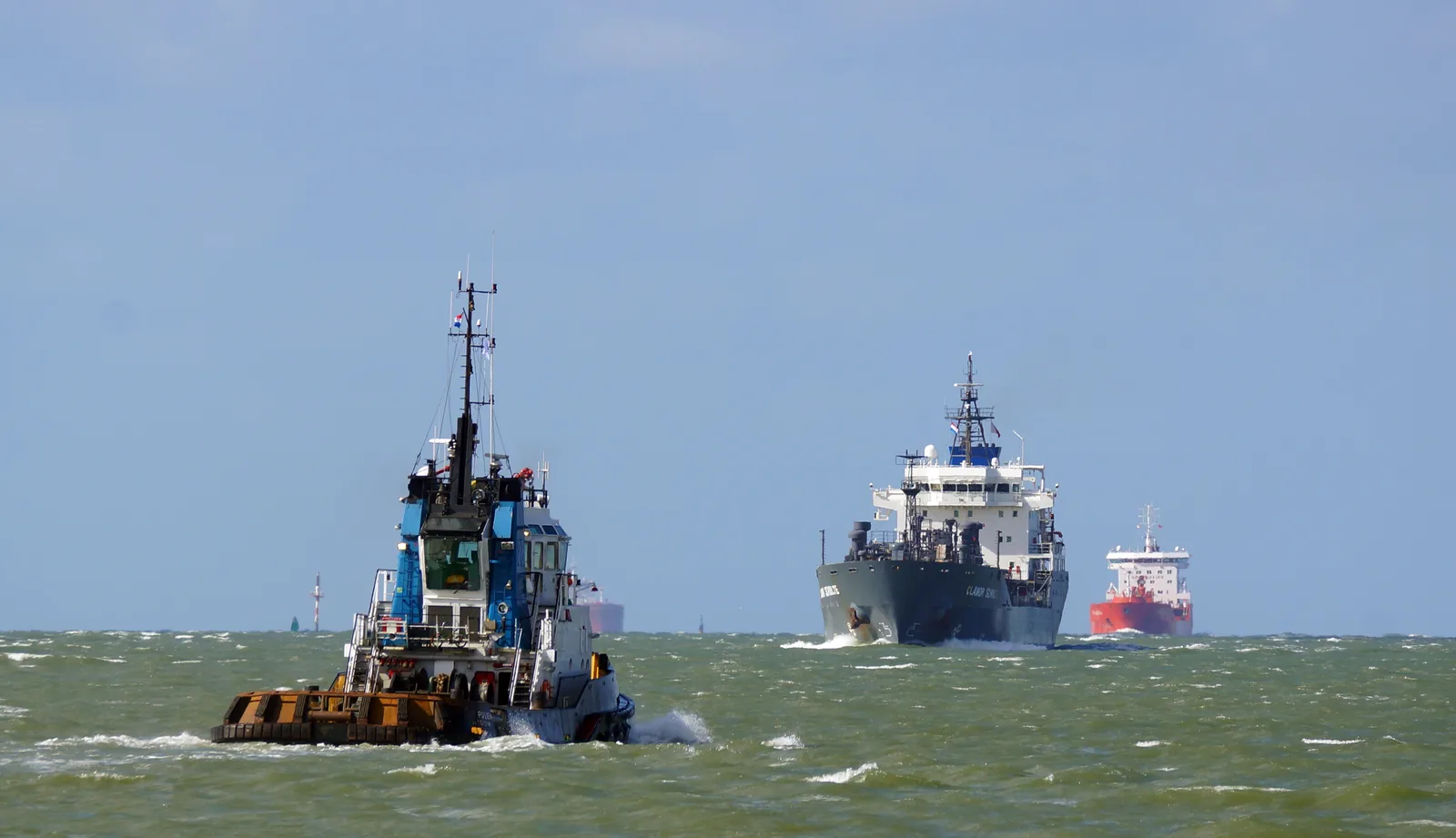
Cargo ships anchored at Sekondi-Takoradi Harbour - not a photograph of this week's Berth-19 or Project Shiprite groundbreaking itself, which has no widely available photograph yet, but the same working harbour both projects are being built onto. Photo: Kees Torn via Wikimedia Commons, CC BY-SA 2.0.
Four stories reached me this week, and none of them is finished business. Ghana's president cut the sod on a $235 million port push. Aliko Dangote broke ground on a $2.5 billion Namibian fuel terminal tied to a pipeline that is still mostly a map. Lagos quietly took delivery of rolling stock nine months late. And in Addis Ababa, Ethiopia's own engineers stood up at their own convention and told each other that financing talk alone will not close the gap - digital delivery discipline will. Read all four as what they actually are: real, sourced, and still in progress.
Ghana cuts the sod on a $235m Takoradi Port push - deeper berths, a ship-repair yard, and a quieter rail promise
President John Dramani Mahama broke ground on 11 November for two projects at Takoradi Port in Ghana's Western Region. Berth-19 is a $98.41 million facility, funded entirely from the Ghana Ports and Harbours Authority's own resources: 300 metres long, 75,000 deadweight-tonne capacity, built for rising mineral-ore exports and dry-bulk imports like clinker, targeted for completion in 26 months. Alongside it, Project Shiprite - a 25-year concession awarded to Prime Meridian Docks Ghana Limited, worth $137 million - will build an integrated ship-repair and maintenance yard in 18 months, promising 430 jobs with 30% reserved for women. Mahama said dredging has already taken the port's depth from about 8 metres to 16: "that can accommodate the largest ship in the world," he told the crowd. He also named the Western Railway Line - starting with a Nyinahini spur to enable bauxite mining - a priority for the 2027 budget. No BIM or digital-delivery claim has been made publicly for either project; this is financing, dredging and concession structure, not a modelling story, and I am not going to read ambition into it that the record does not support.
Dangote breaks ground on a $2.5bn Namibian fuel terminal - and a pipeline that is still mostly a map
On 4 November, at Farm 58 near Walvis Bay, Namibian President Netumbo Nandi-Ndaitwah joined Aliko Dangote to launch a $2.5 billion fuel-storage and pipeline project. The terminal alone would hold about 600 million litres - 360 million litres of diesel, 240 million of petrol, roughly eight times Namibia's existing 75-million-litre national storage - fed by tanker shipments from Dangote's Lagos refinery. The bigger number is the proposed 1,700km pipeline network meant to carry that fuel inland to Botswana, Zambia, Zimbabwe and potentially the DRC, plus a short 16km jetty-to-terminal link. Here is the caveat worth stating as plainly as the headline: the pipeline "remains at the proposal stage," and even the terminal's own coverage cautions that the 4 November launch "should not be read as confirmation that full construction has begun" - the environmental filings so far cover only land subdivision at Farm 58, with separate environmental and regulatory approvals still outstanding. Dangote used the ceremony to raise his continent-wide investment target from $50 billion to $60 billion by 2030, telling the crowd "we also put our money on the table - it's not just about saying things." A groundbreaking ceremony is a real event. A completed pipeline through five sovereign jurisdictions is a different order of claim, and nobody has made it yet.
Lagos quietly takes delivery of three new Red Line trainsets - a quarter late, with 100,000 riders already waiting
Lagos State has started offloading three new train sets, 24 coaches combined, for the Lagos Rail Mass Transit Red Line - Governor Babajide Sanwo-Olu's senior special assistant Jubril Gawat confirmed the delivery on 11 November. The Federal Government under President Bola Tinubu backed the procurement; LAMATA had originally targeted the sets for the third quarter of 2026, so they are arriving roughly a quarter late, and they have not yet entered passenger service. The Red Line currently runs about five trains a day carrying roughly 100,000 passenger trips a month on the Oyingbo-to-Agbado corridor - a fraction of the Blue Line's 500,000 and nowhere near the 5 million-plus Lagos's regulated buses carry monthly. Transport researcher Tonami Playman has put the real fix at 10 to 12 trains an hour, not three more sets. Call it progress, measured honestly against the gap it is meant to close.
Ethiopian engineers tell their own convention: BIM and AI adoption, not more financing talk, is the real bottleneck
At the 27th EACE Convention and International Infrastructure Conference in Addis Ababa on 11 October, under the theme "Building Africa 2050," Ethiopian Association of Civil Engineers President Amanuel Mekonnen Hailemariam told delegates that precision, sustainability and capital efficiency - not capital alone - are the real test, and that Ethiopia's Council of Ministers has endorsed a construction-industry policy framework meant to accelerate BIM and digital-tool adoption. Engineer Zahra Abdulhadi of MIDROC Investment Group's Construction and Real Estate Cluster argued that certifications in BIM and project management, not price alone, are what let Ethiopian firms compete against international contractors. The urgency behind the call: Africa's annual infrastructure-financing gap runs an estimated $68 billion to $100 billion, and speakers said weak project controls, low labour productivity and slow digital adoption - not money alone - are what keeps projects slipping. This is a policy endorsement, not yet a published mandate with compliance dates attached; I will be watching for the framework's actual text before calling it binding.
For decision-makers: a groundbreaking ceremony and a construction start are not the same claim - ask which environmental and regulatory approvals are still outstanding before you count Dangote's $2.5 billion Namibian pipeline as built, the way its own reporting already makes you do. And when a government endorses a policy framework, as Ethiopia's Council of Ministers just did for BIM, ask for the published text and its compliance date before you treat intent as a mandate.
For engineers: Zahra Abdulhadi's point about certification applies to every project on this page, not just Ethiopia's. Ghana's new berth and ship-repair yard need digitally literate project controls to hit their 18- and 26-month targets; Lagos's new trainsets need the same discipline to get from offloading to passenger service faster than the last delivery did. Financing announcements get the headlines - project controls decide whether the headline becomes a working asset.
- Venture Kubariho, unveiling the future with AfroBIM
Sources & further reading
- Graphic Online (Ghana News Agency), 11 November 2026 - President Mahama's groundbreaking at Takoradi Port: Berth-19 and Project Shiprite costs, dimensions, timelines, job figures and direct quotes
- Wikimedia Commons - "Cargo Ships at Sekondi-Takoradi Harbour (Takoradi Harbour)" by Kees Torn, CC BY-SA 2.0: source of this bulletin's hero photograph
- Green Building Africa, 18 November 2026 - Dangote's $2.5bn Namibian tank farm and regional pipeline: location, storage capacity, proposed pipeline route and groundbreaking date
- Construction Review Online - detailed breakdown of the Namibia terminal and pipeline scope, countries served, and the caveat that the launch is not confirmation that full construction has begun
- Nairametrics, 11 November 2026 - Lagos Red Line's three new 24-coach trainsets: delivery status, funding, ridership figures and the LAMATA delivery-timeline slip
- Capital Newspaper (Ethiopia), 11 October 2026 - the 27th EACE Convention: named speakers, the Council of Ministers' construction policy framework, and Africa's infrastructure-financing gap figures
Note: the Dangote Namibia item deliberately carries two sources because they corroborate and expand on each other's figures on a project whose own coverage flags it as not yet fully under construction. The Ethiopia item is six weeks old by publication date - older than this bulletin prefers - but its named speakers, policy detail and Africa-wide financing figures made it worth including over a thinner same-week alternative. No African BIM mandate exists yet in any country covered here; Ethiopia's is a Council of Ministers policy endorsement, not a published, dated mandate, and the text says so plainly.