
45 Years, Two Oceans, Zero Words From Zambia or the DRC: What Tanzania and Angola Just Agreed To
It took 45 years for an Angolan president to visit Tanzania. When Joao Lourenco finally did, he and Samia Suluhu Hassan agreed to join the Atlantic-facing Lobito Corridor to the Indian Ocean's TAZARA line - a railway that runs through Zambia and the DRC, neither of which has said a word about it.

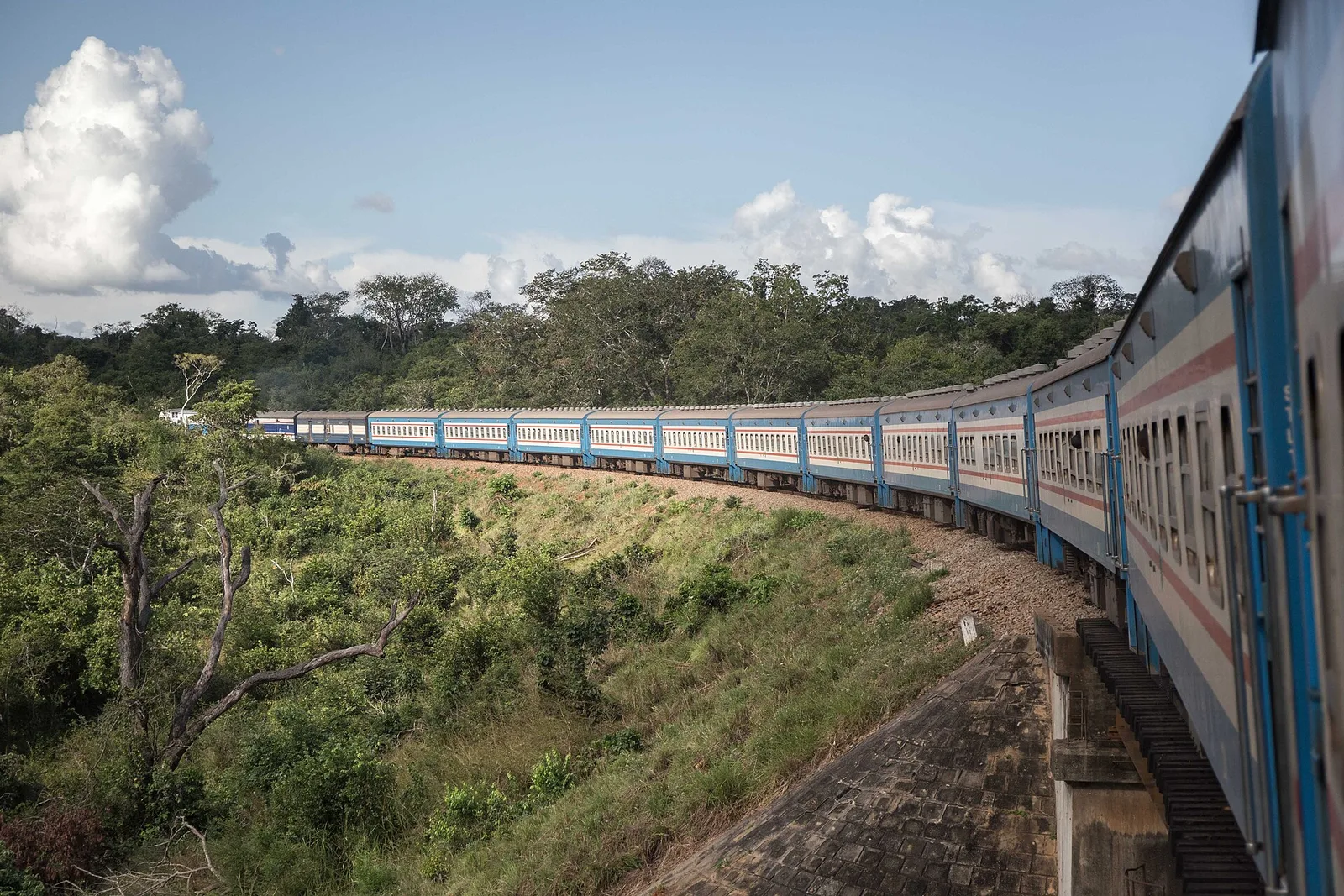
A TAZARA train curving through southern Tanzania - not a photograph of the Tanzania-Angola summit itself, but the existing Indian Ocean line the two presidents have now proposed joining, via Zambia and the DRC, to Angola's Atlantic-facing Lobito Corridor. Photo: Davidktorza via Wikimedia Commons, CC BY-SA 4.0.
On 29 October, Joao Lourenco did something no sitting president of Angola had done in 45 years: he landed in Dar es Salaam. Samia Suluhu Hassan said as much herself, in the statement her office posted after their joint briefing at State House - a four-and-a-half-decade gap she clearly wanted on the record. What came out of Lourenco's three-day state visit was bigger than a reopened embassy and a business forum, though both of those were announced too. Tanzania and Angola agreed, in principle, to connect their two corridors: the Lobito Corridor, which runs from Angola's Atlantic coast through Zambia into the Democratic Republic of Congo, and the Central Corridor, which runs from Dar es Salaam on the Indian Ocean inland along the TAZARA line. Joined end to end, the two would form a single rail route from one ocean to the other. The catch, which the reporting on this summit makes clear without either leader quite saying it: the two countries whose agreement this actually requires are Zambia and the DRC, and neither one was in the room.
What was actually agreed, in Hassan's own words
Here is what I can actually source. Hassan's office posted her account of the 29 October joint briefing in Swahili, from State House in Dar es Salaam, after Lourenco's three-day visit. In it, Tanzania and Angola agreed to connect their Indian Ocean and Atlantic Ocean transport corridors - specifically, joining Angola's Benguela Railway to the TAZARA line at the port of Dar es Salaam. Hassan gave no completion date, and I found no document described as signed for the railway link itself, as distinct from the trip's other outcomes. Those other outcomes are more concrete: Tanzania will reopen its embassy in Angola, the two sides plan a business and investment forum, and they discussed improving air and sea connections along with oil-sector investment and mining cooperation, including through the Africa Mining Centre in Dar es Salaam. Angola has separately invited Tanzania to invest in its Lobito oil refinery, which Tanzania Petroleum Development Corporation is now assessing. The railway pledge is the loosest-worded commitment of the visit, not the firmest - and the route itself runs through Zambia and the Democratic Republic of Congo, neither of which is reported to have taken part in the Dar es Salaam talks or to have said anything publicly about the idea since.
Two corridors, two different sponsors, one $1.4 billion down payment already made
TAZARA was built by China in the 1970s to move Zambian copper exports and fuel imports around white-minority-ruled Rhodesia and South Africa. In 2025, China signed a $1.4 billion pact with Zambia and Tanzania to modernise it. The Lobito Corridor runs the other way - Angola through Zambia to the DRC - backed by the United States and the European Union as a counterweight to China's regional reach, and the week before the Dar es Salaam summit, Italian contractor Webuild won a tender for a section of the Zambia-Lobito Railway itself. TAZARA is widely described, in the same reporting that covers this summit, as a counterweight to that US- and EU-backed line. Whatever the geopolitics, the irony is plain: Tanzania and Angola, sitting on opposite sides of that supposed rivalry, are the two governments now proposing to wire the rival lines together.
What the announcement doesn't say
I looked for three things in the reporting on this summit and found none of them: a completion date, a named funding structure for the Zambia-DRC middle section, and any mention of how a four-country, two-corridor rail link - built by different contractors, under different standards, financed by opposing geopolitical blocs - would actually be designed and coordinated. No source I opened for this piece mentions BIM, a common data environment, or any shared digital model for this corridor. That is an honest gap in the record, not a hidden one, and I am not going to fill it with a guess. The same week also surfaced a separate, unresolved regional puzzle worth noting: Dangote has offered East African governments a 30% stake in his Kenya refinery, Rwanda and Kenya have committed to buy in, Tanzania has not decided, and Tanzania and Uganda are separately discussing a joint refinery of their own in Tanga. None of that touches the railway directly, but it is the same pattern - ambitious regional infrastructure diplomacy, moving faster in press briefings than in signed commitments.
For decision-makers: treat the railway pledge as a political aspiration, not a financed project, until Zambia or the DRC says something about it themselves. The firmer commitments from this visit - the embassy reopening, the investment forum, the oil and mining cooperation - are the ones you can actually act on today. Watch Lusaka and Kinshasa, not Dar es Salaam, for the next real signal on the rail link.
For engineers: if this corridor is ever built, someone will have to reconcile two railways raised by different builders, to different standards, financed by rival blocs, through two more countries that have not yet spoken. That is close to a textbook case for a shared, federated model from day one. Nothing published so far says anyone has committed to building one - which is exactly the kind of question worth asking before the first joint technical committee meets.
- Venture Kubariho, unveiling the future with AfroBIM
Sources & further reading
- Club of Mozambique (Reuters), 2 November 2026 - "Tanzania and Angola agree to link ocean corridors by rail": the 29 October joint briefing, Hassan's Swahili statement, the Benguela-TAZARA link via Dar es Salaam, the 45-year gap since Angola's last presidential visit, the embassy, investment-forum, air/sea and oil-and-mining outcomes, and the separate East African refinery context
- Devdiscourse (Reuters), 30 October 2026 - corroborating report: the Indian Ocean-Atlantic Ocean corridor agreement, the route via Zambia and the DRC, TAZARA's 1970s origin and the 2025 $1.4 billion China modernisation pact, the Lobito Corridor's US/EU backing, Webuild's Zambia-Lobito Railway tender win, and the TAZARA-as-counterweight framing
- Wikimedia Commons - "Train from Lusaka to Dar es Salaam" by Davidktorza, CC BY-SA 4.0: source of this story's hero photograph
Note: this piece reports a bilateral political agreement, not a financed or designed railway project. Neither source opened for this piece states a completion date, a funding structure for the Zambia-DRC section, or any digital-delivery framework for the corridor, and neither records a public statement from Zambia or the DRC responding to the announcement; those are gaps in the public record, not claims this piece makes. The $1.4 billion TAZARA modernisation figure and the Webuild tender result are reported by Reuters via the two outlets above and are passed on as reported. The hero photograph shows the TAZARA line in southern Tanzania, not the Dar es Salaam summit itself, which has no freely-licensed photograph available at time of publication.