Four Years On, Three Days: Burkina Faso's BIM Summit Makes the Case for Africa's Own Digital Standard
From 5-7 November in Ouagadougou, the second SIIBA BIM Afrik - four years after the first - gathered Burkinabe officials and engineers under one argument: that BIM, drones and a rail network Burkina Faso has barely begun building must be designed on African terms, not imported whole.

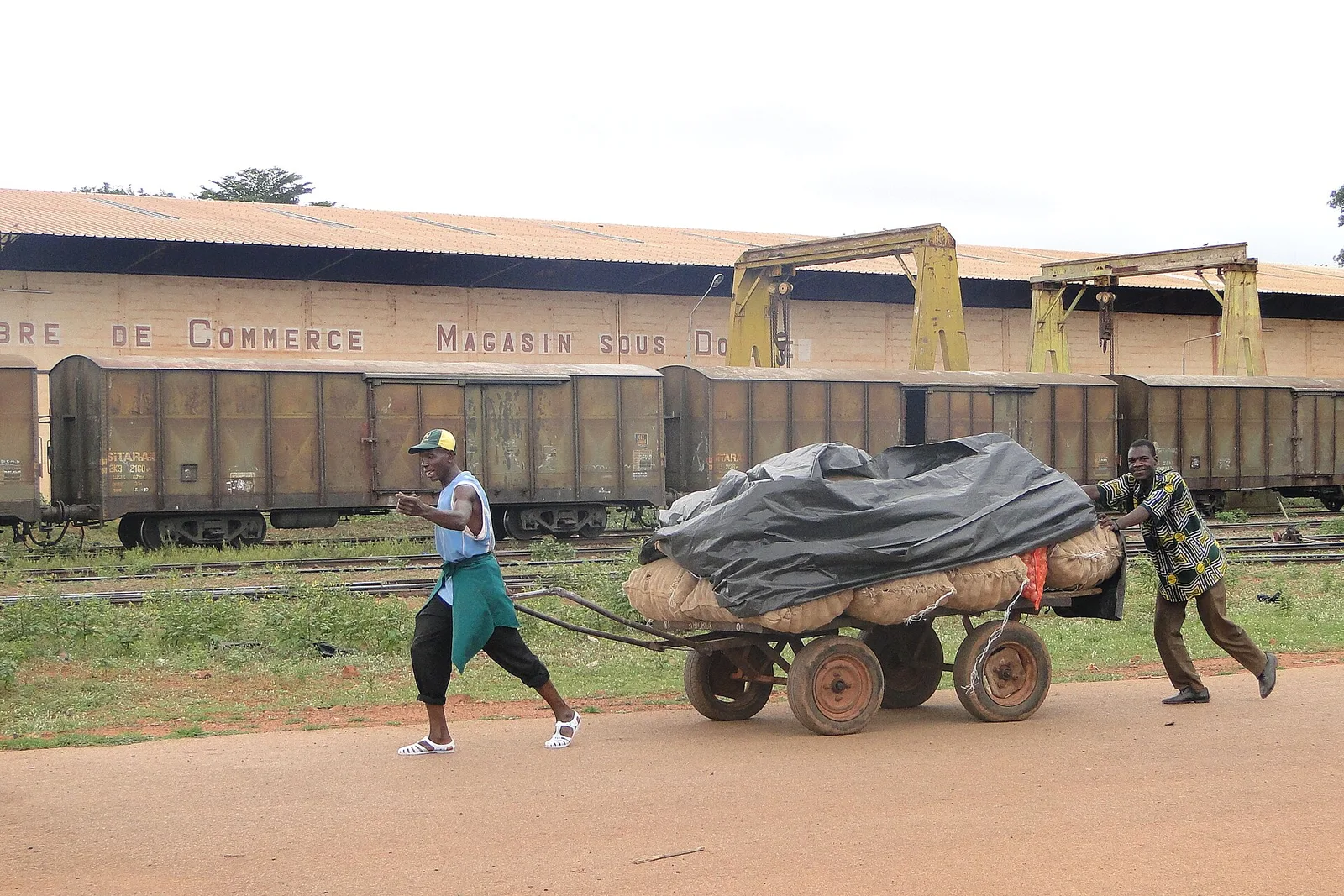
The railway station at Bobo-Dioulasso, Burkina Faso - not the Ouagadougou conference hall where SIIBA BIM Afrik met, but the kind of existing national rail infrastructure the summit's organisers said the country must now extend "almost from scratch," to modern digital standards. Photo: Adam Jones, Ph.D. via Wikimedia Commons, CC BY-SA 3.0.
I've sat through enough industry "innovation salons" to know the difference between one that produces a signed mandate and one that produces a communique. On 5-7 November, Ouagadougou hosted the second edition of SIIBA BIM Afrik - the Salon de l'Innovation de l'Industrie du BTP en Afrique - four years after the first, in 2022, and two years later than organisers had originally planned for 2024. The theme told you exactly where this was headed: "Transformation numerique et innovation dans le BTP et le ferroviaire: quels leviers pour le Burkina Faso?" - digital transformation and innovation in construction and rail, and which levers Burkina Faso can actually pull. Nobody signed a national BIM mandate in that conference hall. What I found, reading two independent accounts of the opening day, is something rarer in Francophone Africa's digital-construction conversation: two named officials saying, on record, that the point is to build the standard at home, not import one.
Two officials, one argument
Fabrice Yangane, CEO of FASO BIM and president of the organising committee, opened with a line I'd put on a banner at every African BTP conference: "Construire davantage ne suffit plus. Nous devons apprendre a mieux concevoir, mieux coordonner, mieux construire et mieux entretenir" - building more is no longer enough; we have to learn to design better, coordinate better, build better and maintain better. He was careful to frame innovation as broader than software: materials, construction technique, project organisation, quality control and maintenance all count, not just a 3D model. His second line is the one I want every reader skeptical of Francophone Africa's capacity to sit with: "Notre pays ne manque pas de talents. Nous avons des ingenieurs, des architectes, des techniciens, des entrepreneurs, des enseignants, des chercheurs et des jeunes capables de concevoir et de realiser de grands projets" - our country is not short of talent; we have engineers, architects, technicians, entrepreneurs, teachers, researchers and young people capable of designing and delivering major projects.
Achille Roland Sow, president of the special delegation running Burkina Faso's Chamber of Commerce and Industry and this edition's official sponsor, put BIM itself on the table in plain terms: a shared digital model that lets every party on a project work from one common base. "Les outils numeriques, les materiaux innovants, la prefabrication et le BIM permettent de reduire les erreurs, d'ameliorer la qualite et de renforcer la transparence," he said - digital tools, innovative materials, prefabrication and BIM reduce errors, improve quality and strengthen transparency. He didn't stop at tools: he called for skilled labour, structured companies and genuine collaboration between government, the private sector, universities and professional bodies, plus deliberate effort to get small and medium-sized firms access to the same innovations the big contractors already have.
On rail - the summit's second axis - Sow made the argument I associate with landlocked economies that have stopped waiting for someone else's railway: Burkina Faso's network is still underdeveloped, and that's the opening, not the obstacle. Almost everything, he said, is still to be built - meaning whatever goes down now can be built straight to current digital-delivery standards, with no legacy system to retrofit. "Pour un pays sans littoral, le rail est un levier de competitivite: il abaisse le cout du fret, securise nos corridors vers les ports et soutient nos filieres minieres, agricole et industrielle" - for a landlocked country, rail is a competitiveness lever: it lowers freight costs, secures corridors to the coast, and supports mining, agriculture and industry.
What's confirmed, and what's still a promise
Here's where I have to be the engineer, not the cheerleader. Everything above is two named officials' stated position at an opening ceremony, reported independently by Burkina 24 and Faso7 - domestic Burkinabe outlets, and the only coverage of this summit I could find anywhere. No regional or international trade press - not Engineering News, not ENR, not BIM Africa's own news page - had picked this up as of the morning after the summit closed. That silence is itself a data point about how much less visible Francophone Africa's digital-construction conversation is to the English-language trade press that usually sets this series' agenda.
The organisers' own site billed more than 3,000 expected participants, more than 20 speakers, and delegations from Burkina Faso, Mali, Niger, Morocco, Senegal, Togo and Cote d'Ivoire - projections published before the doors opened, not a verified head-count I can report as fact. Neither Burkina 24 nor Faso7's opening-day coverage gives an actual attendance figure, a list of resolutions, or a signed outcome document, and Burkina Faso has no national BIM mandate on record for this summit to point to - it is the argument for one, not evidence that one now exists. If a closing communique, an attendance count or a government response follows this week, that is a separate, harder story - and whether this translates into a procurement rule or stays a conference-room applause line is exactly what I will be watching for.
For decision-makers: if you run a Burkinabe or regional contracting firm, FASO BIM's own programme - training, SME access to digital tools, the diaspora axis - is a more concrete entry point right now than waiting on a national mandate that does not yet exist. Ask Yangane's organisation what the training track actually delivered before the next edition, not after.
For engineers: Sow's checklist - digital tools, innovative materials, prefabrication, plus BIM - is the right standard to hold any Francophone African tender to, long before a client's RFP spells it out. Learn to argue for it in those terms now, because "BIM" alone still reads as a software licence to too many procurement committees.
- Venture Kubariho, unveiling the future with AfroBIM
Sources & further reading
- Faso7, 5 November 2026 - "BTP et secteur ferroviaire: la 2e edition du SIIBA BIM Afrique s'ouvre a Ouagadougou sur fond d'innovation numerique": full quotes from Fabrice Yangane and Achille Roland Sow, the three-day format, and the rail-competitiveness argument
- Burkina24, 5 November 2026 - "SIIBA BIM AFRIK 2026: l'innovation au coeur des reflexions sur l'avenir du BTP et du ferroviaire au Burkina Faso": corroborating coverage of the opening, Sow's BIM definition and SME-access call
- Burkina24, 29 October 2026 - "2eme edition du SIBA BIM Afrik": dates and venue, the first edition's 2022 date, the postponement from a planned 2024 edition, and Yangane's AI remarks
- SIIBA BIM AfriK official site: the five programme axes, organiser-projected attendance and speaker counts, and the list of countries billed as represented
- Wikimedia Commons - "Men Push a Cart Past the Railway Station - Bobo-Dioulasso - Burkina Faso" by Adam Jones, Ph.D., CC BY-SA 3.0: source of this story's hero photograph
Note: the "3,000 participants," "20 speakers" and seven-country attendance figures come from the organisers' own pre-event promotional site, not a verified count from either news report opened for this piece - treat them as projections, not a reported turnout. No source found discloses a resolution, outcome document or government response from this summit, and none states that Burkina Faso has adopted a national BIM mandate; this event is advocacy for one, not evidence one exists. Coverage located for this piece was limited to two domestic Burkinabe outlets; no regional or international trade press coverage was found as of publication. The hero photograph depicts the existing railway station at Bobo-Dioulasso, Burkina Faso's second city - not the summit venue itself, for which this research found no freely-licensed photograph.