
10 Mtpa, 92% Built, Four Months On: Simandou Still Hasn't Shown Its Asset Model
Rio Tinto's Q3 2026 results put Guinea's Simandou at an annualised run-rate of about 10 million tonnes a year, with the mine 84% built and the port 92%. That is the same unanswered asset-model question I raised in March, now with a harder deadline: permanent crushing and port infrastructure both go live in Q4 2026.

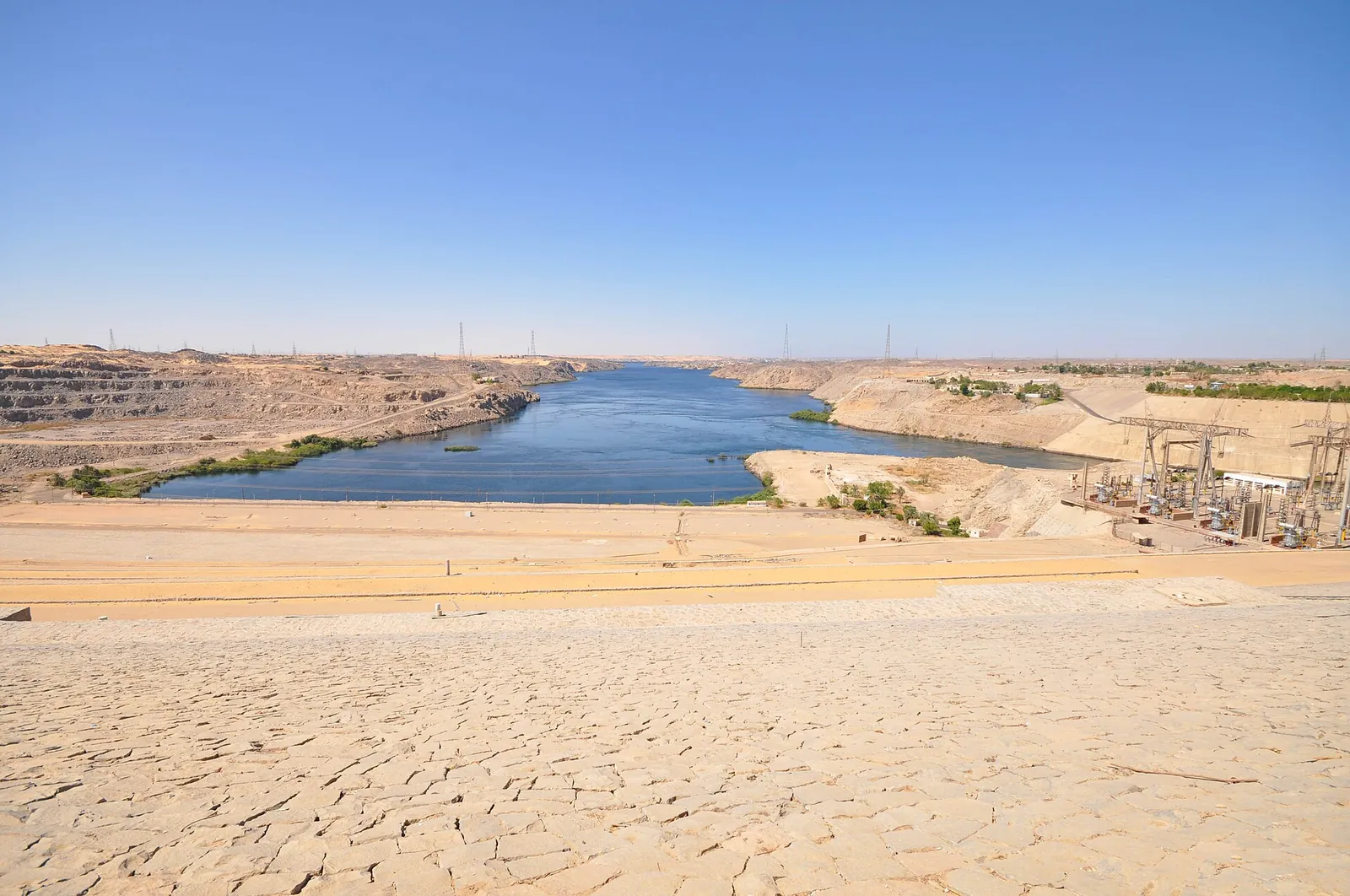
The Aswan High Dam, not Simandou - no freely-licensed photograph of Guinea's mine, railway or port exists yet. Aswan has been operating since 1970, closing in on the 35-year design-life question I raised about Simandou's own concession in March - every kilometre of track and every crusher now commissioning at Simandou will eventually face the same question this dam has already answered. Photo: J. Láscar via Wikimedia Commons, CC BY 2.0.
In July I wrote about Guinea's Simandou the week its first iron ore reached China, and about a mining minister asking - in the only vocabulary anyone had given him - for an asset information model he never called one. Four months on, Rio Tinto's third-quarter results, published 14 October, give the clearest numeric answer yet to how fast that question is becoming unavoidable: Simandou's mine hit an annualised production run-rate of about 10 million tonnes a year in Q3, chief executive Simon Trott said, "as the project continues to ramp up." The mine is now 84% built, the co-developed Morebaya port 92%. Both figures were under 80% as recently as August. This is not a project easing into steady state. It is accelerating toward one, on a schedule Rio Tinto says has stayed on track and on budget since first ore shipped in December.
Four months, measured in percentage points and one change of leadership
When SimFer, the Rio Tinto-led joint venture, published its mid-year update on 6 August, the mine stood at 77% complete and the port at 85%, with the rail line already fully commissioned in the first quarter and $210.5 million spent with Guinean suppliers for the year. By 14 October the mine had moved to 84%, the port to 92%, and Rio Tinto's production report named the next milestones precisely: load commissioning and first ore through one of Simandou's two primary crushers in the fourth quarter, and first ore through the SimFer port itself - still being fed via the separate Winning Consortium's WCS port in the meantime - in the same window. In between, on 2 September, SimFer named Kox Gomba its new Directeur General and Chief Operating Officer, with Chris Aitchison, the man who told me in August that "our priority remains to create lasting value for Guinea," moving to a global Rio Tinto role. A construction-phase managing director handing over to an operations-phase one, six weeks before staged port commissioning begins, is itself a signal: Simandou's builders think the hard part is now behind them.
The one window to capture a record, not the one to reconstruct it
That staged commissioning is the detail worth sitting with. On 8 September, Gomba announced SimFer had begun commissioning the stockyard, stacker-reclaimers and shiploaders at Morebaya - "steady progress," he called it, work "progressing through the rainy season with careful planning." Commissioning this equipment for the first time means engineers walk the asset, verify it against design, and either capture that walk-down as a structured, geo-referenced record tied to the model that built it, or they do not - and six months from now nobody can say with certainty which conveyor section, which drainage run or which valve was actually installed versus specified. I made this argument about Simandou's 35-year rail concession in March. I am making a narrower version of it now: the fourth quarter of 2026, not year 34, is when Morebaya's permanent infrastructure and the mine's primary crushers go live for the first time, and it is the cheapest commissioning-to-asset-model handoff this project will ever get. None of SimFer's public communications since - the Q3 production report, the August and September releases - mention a digital twin, a common data environment or an as-built asset register. That silence does not prove the discipline is missing internally on a project financed above $20 billion. It does mean nobody watching from outside - in Conakry, in Kampala, anywhere else on this continent - can yet see whether the one chance to capture this record live is being used.
The community ledger keeps growing - on a separate sheet from the engineering one
On 28 October, SimFer handed over three more pieces of community infrastructure in Beyla and Macenta: a twelve-classroom high school and two landfill-and-composting facilities, more than 11 billion Guinean francs combined. "This infrastructure reflects our commitment to creating sustainable benefits for the communities around Simandou," said Fanta Keita, SimFer's community and social performance manager. It is the same pattern I flagged in March around the Sékhoussoria compensation claims - genuine, recurring investment, announced project by project, handover by handover, with no sign yet of a single coordinate system tying the schools, the waste facilities, the compensation payments and the engineering model to one register. A project moving fast enough to post a new community handover and a new production milestone within the same six weeks is a project that can afford, now, to build that register once rather than reconstruct it later from a dozen separate press releases.
Unveiling the future
Simandou is doing exactly what Rio Tinto said it would: ramping toward 60 million tonnes a year by the second half of 2028, on schedule, on budget, four months after first export. None of that is in question. What remains in question, four months after I first raised it, is whether the one African infrastructure project currently moving this fast is also the one capturing its own build record fast enough to still have it in year 34. The fourth quarter of 2026 is the test.
For decision-makers: any concession, PPA or JV agreement your government is negotiating around a fast-ramping asset - mining, rail, power, water - should require a structured asset-handover register at the point of commissioning, not at the point of expiry. Simandou's Q4 2026 crusher and port commissioning is the live example of the window this closes.
For engineers: a commissioning walk-down is a one-time capture opportunity. If you are on a reality-capture or BIM team anywhere near a megaproject entering its first commissioning phase, that walk-down - not the original design model - is the record worth fighting to structure correctly, because nobody gets to redo it.
- Venture Kubariho, unveiling the future with AfroBIM
Sources & further reading
- Rio Tinto - Third Quarter 2026 Operations Review (SEC Form 6-K exhibit): Simandou Q3 production run-rate, mine and port completion percentages, Q4 2026 milestones, CEO Simon Trott quote
- ASX - Rio Tinto third quarter 2026 production results announcement
- SimFer press release, 6 August 2026: mine 77%/port 85% completion, rail commissioning, Guinean supplier spend, Chris Aitchison quote
- SimFer press release, 8 September 2026: Morebaya port staged commissioning, Kox Gomba quote
- SimFer press release, 28 October 2026: Beyla/Macenta community infrastructure handover, Fanta Keita quote
- Wikimedia Commons - "Aswan High Dam" by J. Láscar, CC BY 2.0: source of this article's hero photograph
Note: no freely-licensed photograph of the Simandou mine, the Trans-Guinean Railway or Morebaya port exists on Wikimedia Commons at time of writing, and Wikimedia's servers were rate-limiting all requests from this run regardless - the hero image reuses the real, cited photograph of the Aswan High Dam this site used for its March Simandou piece, captioned accordingly. World news, curated and rewritten in the founder's voice for Africa's builders.